Owning a home is often the largest investment most people will ever make, yet we frequently treat our houses like static objects rather than complex, breathing machines. We notice the paint color or the kitchen backsplash, but we often ignore the hidden veins and arteries—the wiring, the pipes, and the ventilation—until something stops working entirely. This “reactive” approach to homeownership is arguably the most expensive way to live.
When you wait for a system to fail, you aren’t just paying for a repair; you are paying a “neglect tax” in the form of inflated monthly utility bills, emergency service premiums, and the premature replacement of expensive equipment. By shifting to a proactive maintenance mindset, you can reclaim roughly 20% to 30% of your energy costs and extend the lifespan of your home’s critical infrastructure by years. This guide serves as a comprehensive manual for transforming your home into a high-efficiency sanctuary.
Optimizing Your Climate Control for Year-Round Savings

The heating and cooling system is the undisputed heavyweight champion of energy consumption, typically accounting for nearly half of a standard home’s energy use. When these systems are dirty or poorly maintained, they have to work significantly harder to move air and reach your desired temperature, leading to a massive spike in kilowatt-hours.
The Power of Airflow
The most vital task any homeowner can perform is the monthly inspection of air filters. A clogged filter restricts airflow, forcing the blower motor to run longer and hotter. Beyond the filter, you should ensure that all supply and return vents are unobstructed by furniture or rugs. Many homeowners mistakenly close vents in “unused” rooms thinking it saves money; however, most modern systems are designed for specific pressure loads, and closing vents can actually cause the system to work harder due to increased backpressure.
- Seal the Ductwork: Use mastic sealant or metal tape (not standard duct tape) to seal visible gaps in basement or attic ducts.
- Smart Thermostat Utilization: Program your home to be 7-10 degrees warmer or cooler when you are away for more than 4 hours.
- Outdoor Unit Clearance: Keep at least two feet of clear space around your exterior condenser to allow for proper heat exchange.
While a homeowner can handle basic cleaning and filter swaps, the internal mechanics of a cooling system are complex. If you notice your home isn’t reaching the set temperature or if you hear strange grinding noises, it is time to seek professional air conditioning repair. Similarly, as the seasons shift, ensuring your furnace or boiler is operating at peak combustion efficiency through scheduled heating services can prevent carbon monoxide risks and ensure you aren’t literally burning money through the chimney.
Electrical Systems: Efficiency Beyond the Light Switch
We often view electricity as a binary—either the lights are on or they are off. However, the efficiency of your electrical system depends heavily on the “cleanliness” of the power delivery and the integrity of the connections. High-resistance connections, often caused by loose wiring or aging components, generate heat. This heat is wasted energy that you are paying for but never getting to use as light or power.
Eliminating the Vampire Load
“Vampire loads” or phantom power refers to the energy consumed by electronic devices while they are switched off but still plugged in. Modern homes are filled with these: coffee makers with clocks, idling game consoles, and phone chargers.
- Power Strips: Use “smart” power strips that cut power to peripherals when the main device (like a TV) is turned off.
- Unplugging: If a guest room isn’t in use, unplug everything in it.
- Timers: Use mechanical or digital timers for holiday lights or decorative lamps.
If your home is older, the wiring may not be rated for the massive electrical load of modern appliances and home offices. If you experience flickering lights or frequently tripped breakers, it is wise to schedule a comprehensive electrical inspection. In some cases, the bottleneck is the service entry itself. If your home still runs on a 60-amp or 100-amp service while you’re trying to run an EV charger and central air, an electric panel replacement might be the only way to ensure power is distributed safely and efficiently without overheating the circuits.
Professional Electrical Upgrades and Minor Fixes
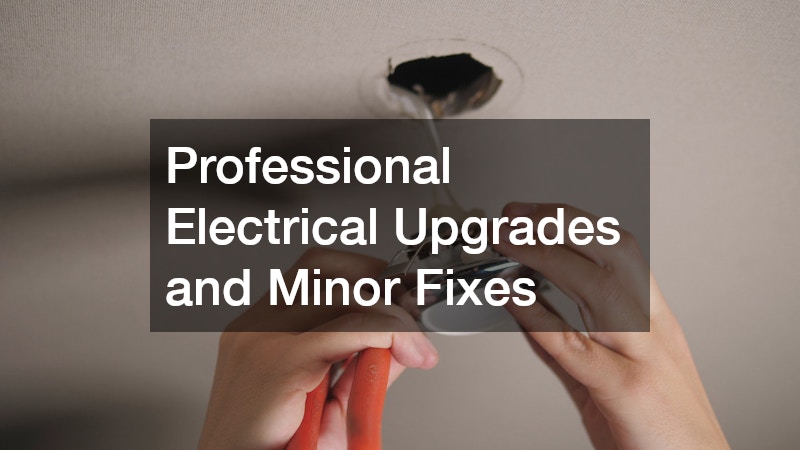
Transitioning to a high-efficiency electrical profile involves a mix of DIY diligence and professional expertise. The goal is to reduce the “demand” side of the equation while ensuring the “supply” side is robust enough to handle it without loss.
Lighting and Smart Integration
The transition from incandescent or CFL bulbs to LEDs is a well-known tip, but the real efficiency comes from integrated lighting design.
- Motion Sensors: Install these in pantries, laundry rooms, and garages where lights are frequently left on by mistake.
- Dimmers: Modern LED-compatible dimmers allow you to use only the light you need, extending bulb life and reducing draw.
- Photo-Cells: For outdoor lighting, use sensors that turn lights on at dusk and off at dawn to ensure they aren’t burning during daylight hours.
For many homeowners, managing light repairs like replacing a broken dimmer switch or updating an old outlet is a manageable weekend task. However, once you move into the territory of adding new circuits, wiring high-voltage appliances, or troubleshooting a dead circuit, you should rely on qualified residential electricians. Professionals ensure that every connection is torqued to specification, which prevents the micro-arcing that leads to energy waste and fire hazards.
Maximizing Water Efficiency and Heating Performance
Water heating is typically the second-largest energy expense in a home. Much like your HVAC system, your water heater is prone to “scaling”—the buildup of minerals like calcium and magnesium on the heating elements or at the bottom of the tank. This scale acts as an insulator, meaning the heater has to run longer to get the water through the sediment to the desired temperature.
Maintenance for Longevity
- Temperature Adjustment: Most manufacturers set water heaters to 140°F, but 120°F is sufficient for most households and prevents scalding while saving significant energy.
- The Annual Flush: Draining a few gallons of water from the bottom of the tank once a year helps remove sediment buildup.
- Pipe Insulation: Insulating the first six feet of hot and cold water pipes connected to the heater reduces “standby” heat loss.
If you find that your hot water supply is inconsistent or if you see rust-colored water, it is important to address these water heater repairs immediately. A leaking or failing unit can cause thousands of dollars in water damage. Furthermore, keeping the rest of your home’s delivery system in check is vital. Slow drips from faucets or running toilets can waste hundreds of gallons of water a month. Utilizing professional plumbing services to install low-flow aerators and pressure-reducing valves can stabilize your home’s water pressure, protecting your fixtures and reducing your monthly bill.
High-Performance Appliance Care
Your kitchen and laundry room are power-hungry hubs. Because these appliances are used daily, even a small drop in their efficiency can result in a noticeable increase in your utility costs over the course of a year.
The Refrigerator: The 24/7 Power Consumer
Your fridge never sleeps. If the coils are covered in dust or pet hair, the compressor has to work twice as hard to reject heat.
- Coil Cleaning: Vacuum the coils at the back or bottom of the fridge every six months.
- Gasket Integrity: Perform the “dollar bill test.” Close the door on a dollar bill; if it pulls out easily, your seal is leaking cold air, and the gasket needs cleaning or replacement.
- Temperature Settings: Keep the fridge at 37-40°F and the freezer at 0°F.
Laundry Efficiency
The dryer is one of the most energy-intensive appliances in the house. If the vent is clogged with lint, the moist air cannot escape, meaning your clothes take two cycles to dry instead of one.
- Vent Cleaning: Use a brush kit to clean the entire length of the dryer duct annually.
- Full Loads Only: Both washers and dryers run most efficiently when full, but not overloaded.
When an appliance starts making a loud noise or stops heating correctly, many people assume they need to buy a new one. However, an appliance repair service can often fix a faulty heating element or a worn belt for a fraction of the cost of a new machine. Furthermore, if you are planning a kitchen renovation, ensure your electrical work is handled by a pro to accommodate the high-amperage needs of modern induction cooktops and convection ovens, which are far more efficient than older electric or gas models.
Sealing the “Thermal Bridge”
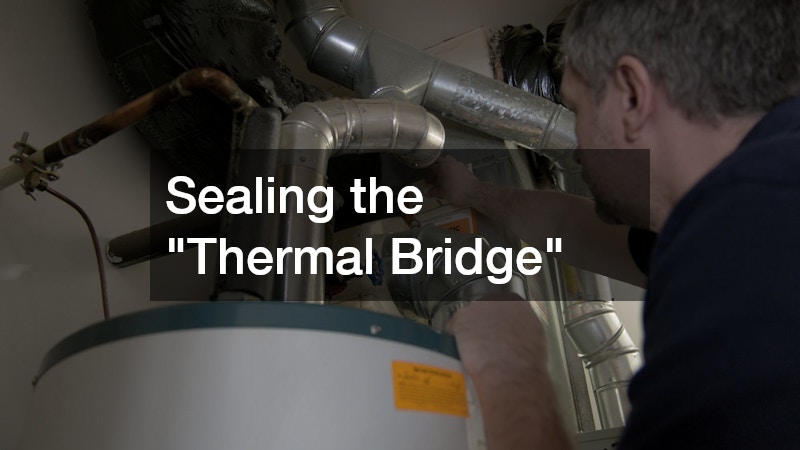
You can have the most efficient HVAC system in the world, but if your home’s “envelope” is full of holes, you are essentially trying to air condition the entire neighborhood. Air leakage accounts for a huge portion of energy waste in older homes.
Finding the Leaks
Air doesn’t just leak through open windows. It leaks through “penetrations”—places where wires, pipes, or vents go through your walls and ceilings.
- The Attic Hatch: This is often the largest “hole” in a house. Use weatherstripping and a piece of rigid foam insulation to seal it.
- Outlet Gaskets: Install small foam gaskets behind the faceplates of outlets on exterior walls to stop drafts.
- Caulking and Weatherstripping: Check the seals around doors and windows every autumn. If you can see light through a door frame, air is escaping.
Insulation: The Thermal Blanket
Check the insulation levels in your attic. If you can see the wooden floor joists, you likely don’t have enough insulation. Adding “blown-in” cellulose or fiberglass batts can create a more stable indoor temperature, reducing the frequency with which your heating and cooling systems need to cycle on and off.
A Year-Round Efficiency Calendar
Maintaining a home is overwhelming if you try to do it all at once. Breaking tasks down by season ensures nothing is missed and the workload remains manageable.
Spring: The Wake-Up Call
- Inspect roof shingles for winter damage to prevent leaks.
- Clean gutters to ensure water moves away from the foundation.
- Service the AC unit before the first heatwave.
- Check outdoor faucets for freeze damage.
Summer: Peak Performance
- Check the attic for proper ventilation; extreme heat buildup can damage shingles and strain the AC.
- Inspect window screens to allow for natural cross-ventilation on cool nights.
- Reverse ceiling fans to run counter-clockwise, creating a cooling downdraft.
Fall: The Preparation
- Seal gaps in the building envelope with caulk or spray foam.
- Get a professional furnace tune-up.
- Drain and store garden hoses.
- Clean the chimney if you have a wood-burning fireplace.
Winter: The Protection
- Monitor for ice dams on the roof, which indicate poor attic insulation.
- Check the basement or crawlspace for dampness.
- Insulate any exposed pipes in unheated areas to prevent bursts.
The Economics of Prevention
To truly understand the value of maintenance, one must look at the “Total Cost of Ownership.” A standard central air conditioning system might cost $6,000 to $10,000 to replace. With no maintenance, that system might last 10 to 12 years. With annual cleanings, filter changes, and minor calibrations, that same system can easily last 15 to 20 years.
When you multiply that logic across every system in your home—the roof, the water heater, the electrical panel, and the appliances—the savings amount to tens of thousands of dollars over a decade. Furthermore, a well-maintained home holds its value. During a home inspection for a future sale, a “clean bill of health” on the mechanical systems gives the seller immense leverage and prevents “price chipping” from buyers who are afraid of upcoming repair costs.
Efficiency is not just about the environment; it is about the stewardship of your resources. It is about the peace of mind that comes from knowing that when a storm hits or a heatwave arrives, your home is prepared to handle the stress without breaking the bank or leaving you in the dark.
Taking the First Step

Improving the efficiency of your home doesn’t require a massive renovation or a six-figure budget. It begins with curiosity—walking through your rooms and looking for the small gaps, listening for the unusual hums, and checking the dates on your last service calls. By addressing the small issues today, you prevent the catastrophic failures of tomorrow.
Start small. Change your air filter this afternoon. Vacuum the coils behind your refrigerator tonight. Schedule that overdue inspection for next week. Over time, these small habits coalesce into a lifestyle of home stewardship that pays dividends in comfort, safety, and financial freedom. Your home is your sanctuary; treat it with the care it deserves, and it will provide you with a lifetime of reliable service.